Natural Disaster in the Lötschental: The Long Road to Recovery After the Landslide in Blatten
15 July 2026
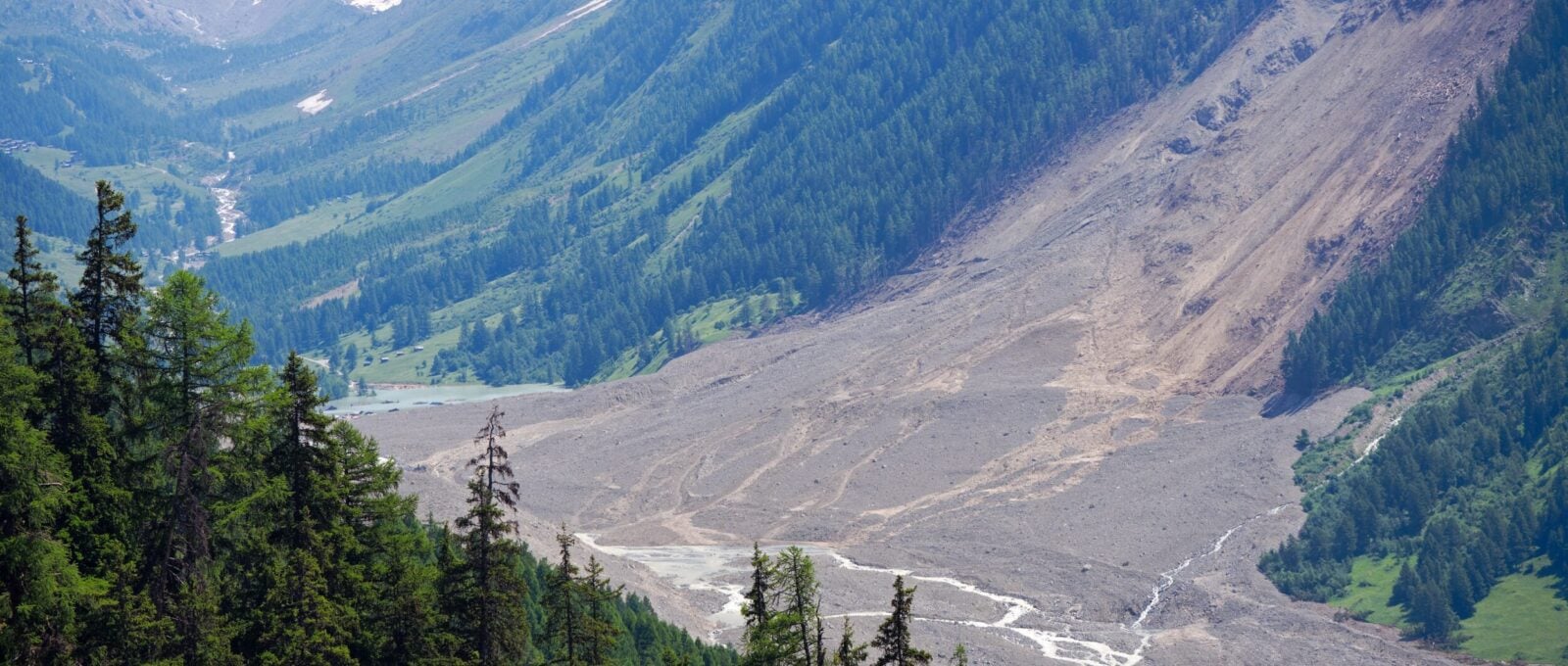
Reconstruction following the natural disaster in Blatten will continue to be a part of life in the Lötschental for many years to come.
From the landslide to reconstruction—an overview.
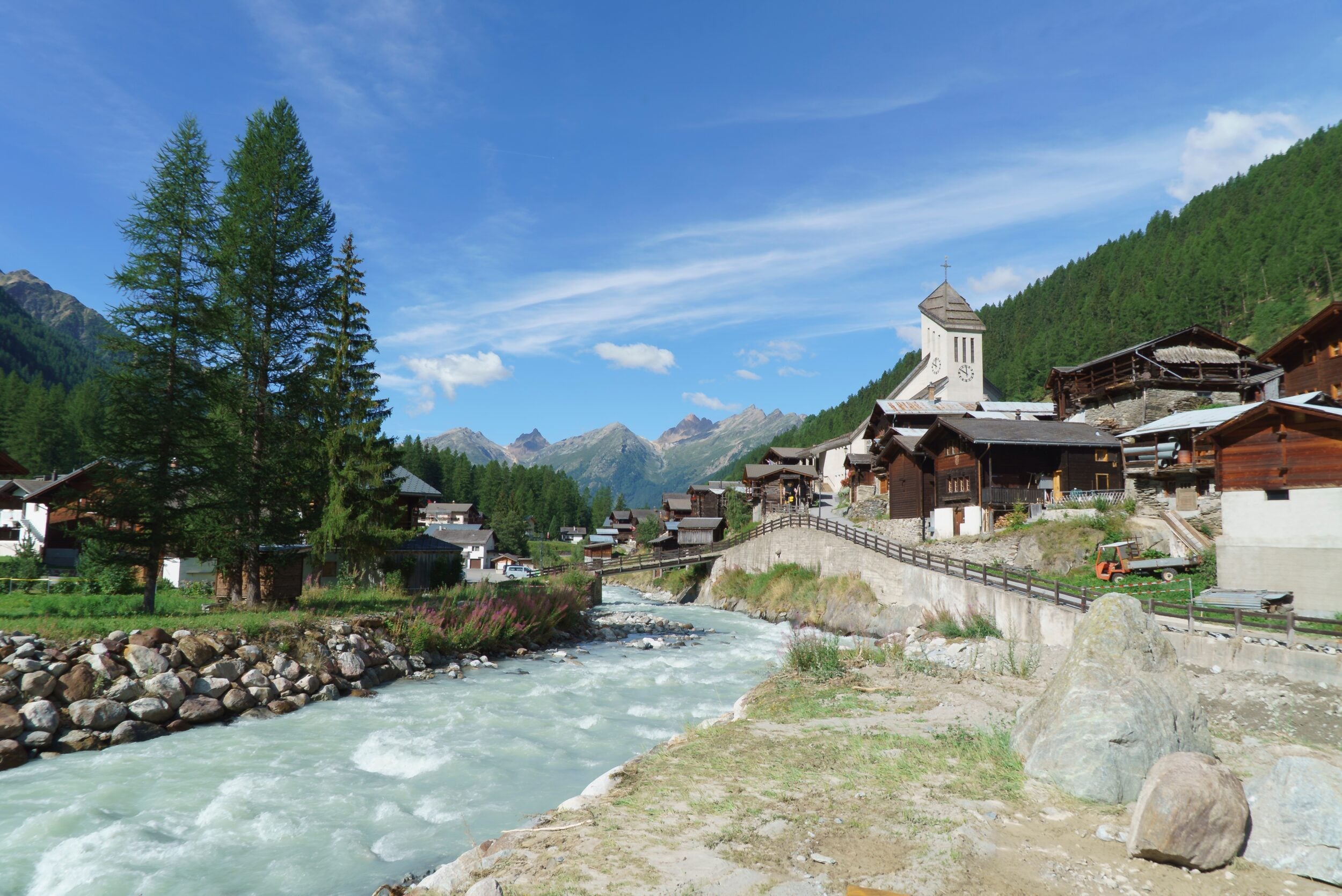
It has been over a year since the landslide in Blatten, but for those affected and the Lötschental region, the effects of the natural disaster are far from over. As preparations for reconstruction are underway, loss, uncertainty, and the search for a new outlook continue to shape the daily lives of many people. That is precisely why it is still hard to believe how quickly life in Blatten changed forever in the space of just a few moments. The landslide highlighted the importance of geological monitoring, sound risk assessments, and effective evacuation procedures for civil protection. The following article looks back on the events, examines the current situation in the Lötschental, and places the case within the broader context of natural hazard management in Switzerland. The photo below shows Blatten before the landslide and serves as a painful reminder of how abruptly life in the village has changed.
The Landslide in Blatten: An Overview of the Events
From the First Signs to Evacuation
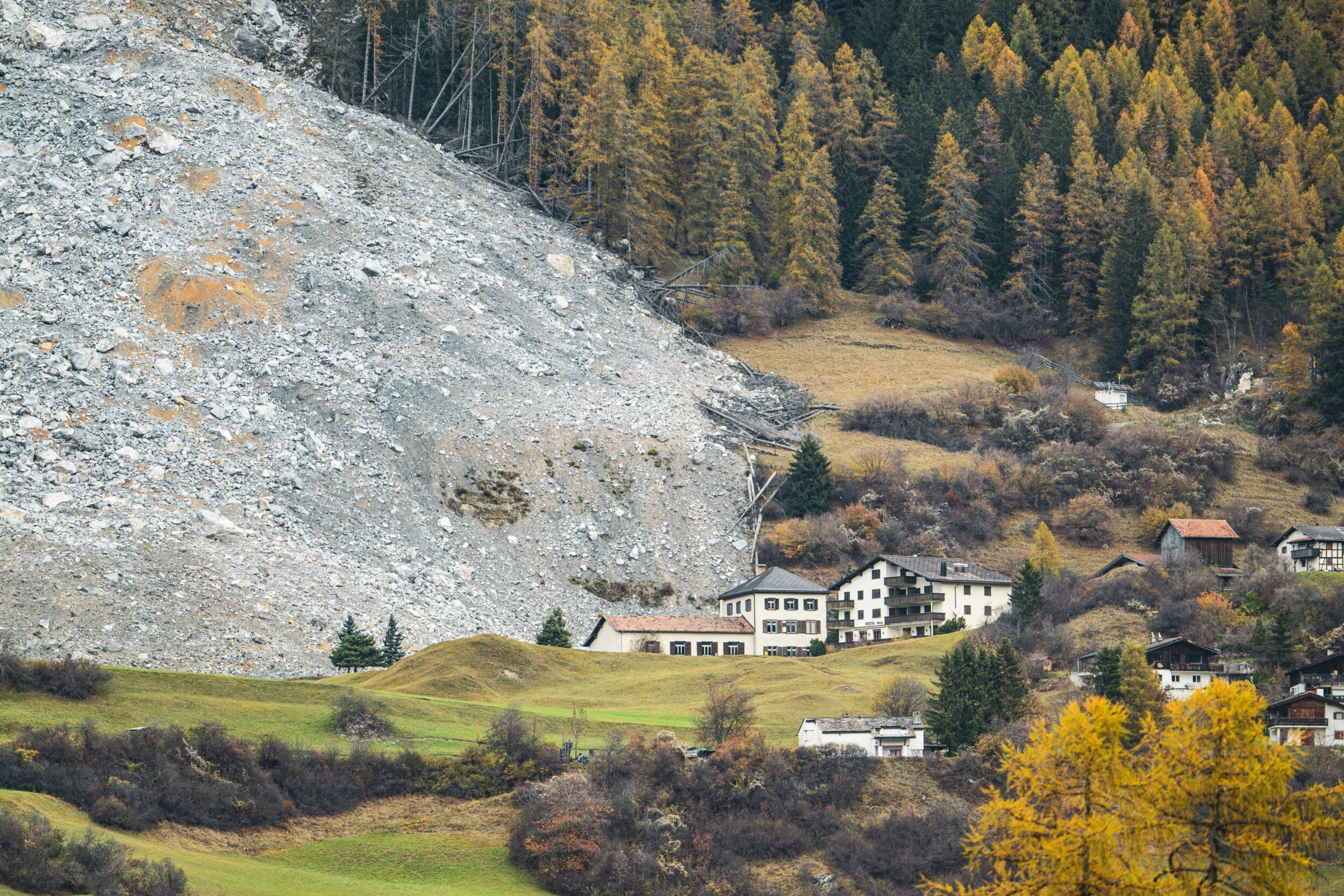
The landslide in Blatten was preceded by several days of increasing warning signs. As early as mid-May 2025, experts had recorded increased rock movements on the Kleines Nesthorn above the Lötschental. The unstable rock masses began to shift more and more, also affecting the Birch Glacier below. As a result, the danger level rose steadily, prompting geologists and authorities to monitor the situation closely (Swiss Radio and Television [SRF], 2025a). Various monitoring methods were used to assess the situation, including GPS measurements, drone imagery, and other geological survey techniques. The data collected showed that the slope’s instability was steadily increasing. Although neither the exact timing nor the extent of a possible rockslide could be predicted, evidence of a major event was mounting (SRF, 2025a).
Between May 18 and 19, 2025, the authorities therefore ordered the precautionary evacuation of Blatten. About 300 residents, as well as other people from at-risk areas, had to leave their homes. In retrospect, this decision proved to be crucial in getting the population to safety in time (SRF, 2025a).
The landslide and its immediate consequences
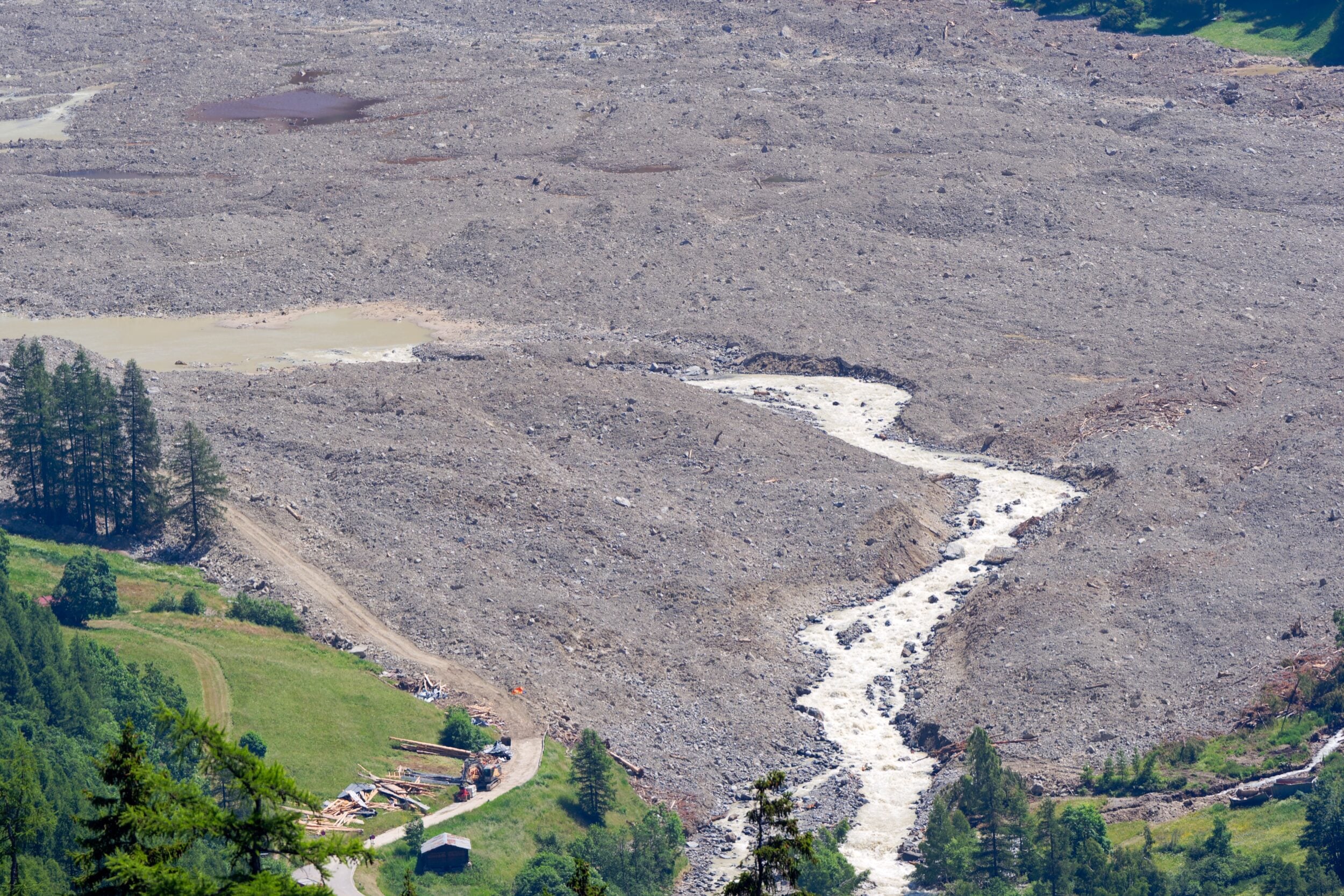
On May 28, 2025, millions of cubic meters of rock, ice, and debris finally broke loose from the slope and plunged into the valley. Within a matter of seconds, large parts of Blatten were buried. Numerous buildings disappeared beneath the masses of debris, infrastructure was destroyed, and the village’s landscape was permanently altered (SRF, 2025a). However, the landslide did not mark the end of the danger. The debris dammed up the Lonza River, leading to the formation of a natural lake. This created the risk of further flooding or debris flows should the water flow unchecked. At the same time, unstable slopes and ongoing rock movements significantly hampered the work of emergency responders and geologists (SRF, 2025a). In the weeks that followed, efforts focused on securing the area and stabilizing the river’s course. Blatten and the surrounding areas remained largely off-limits, while experts continued to monitor and reassess the situation on an ongoing basis. Only after the immediate danger had gradually subsided did the focus shift more toward long-term planning and reconstruction (SRF, 2025a).
The Aftermath of the Natural Disaster: People, Reconstruction, and the Future in the Lötschental
The Situation Today
Where the center of the village of Blatten once stood, massive piles of debris still dominate the landscape today. Stabilization and cleanup efforts are still ongoing. Even more than a year after the rockslide, unstable rock areas remain on the Kleines Nesthorn. For this reason, the monitoring system is being continuously expanded and the hazard situation is regularly reassessed to detect changes early and continuously evaluate risks (Swiss Radio and Television [SRF], 2026a). For many of those affected, daily life continues to be shaped by the aftermath of the disaster. Nevertheless, the first signs of a return are emerging: Since the end of May 2026, residents have been able to return to undamaged homes in Weissenried, Eisten, and the part of Blatten that was not buried (SRF, 2026a). Many, however, are faced with the difficult question of whether a newly emerging village can be the same home as the lost Blatten (SRF, 2026c).
The Reconstruction
As immediate emergency and safety measures are increasingly supplemented by long-term planning, the focus is shifting more strongly toward reconstruction. The goal is not to reconstruct the destroyed village exactly as it was, but to develop a sustainable Blatten within a safe settlement area. Work on the detailed land-use plan is already underway and is being carried out with the involvement of the local population (State Council of the Canton of Valais, 2025; SRF, 2026a). At the same time, extensive infrastructure projects are being implemented. Construction of the new cantonal road, which is intended to ensure future access to the Lötschental valley, has been underway since the end of April 2026. Until its completion, access will be provided via temporary transportation solutions. This includes a temporary cable car between Wiler and Weissenried, which is currently under construction and is intended to supplement the connection to the valley starting in winter 2026. At the same time, destroyed buildings are being demolished and the construction site is being prepared for future building construction. To this end, the rubble is being gradually removed and dried so that the ice remaining within it can melt completely, creating a stable foundation for future construction (SRF, 2026a). According to the current schedule, the first buildings in the new Blatten are to be completed by 2030, allowing the population to gradually return starting at that time. However, the reconstruction is far more than just a construction project. It is also intended to secure the economic future of the Lötschental Valley. Efficient transportation links are considered a key prerequisite for tourism, commerce, and agriculture, as well as for the return of the population. At the same time, managing natural hazards remains an ongoing challenge that will continue to shape the region’s development in the future (SRF, 2026b; SRF, 2026a).
Natural Hazards in the Alpine Region: From Early Warning to Evacuation
Early Detection of Natural Hazards and Minimizing Risks
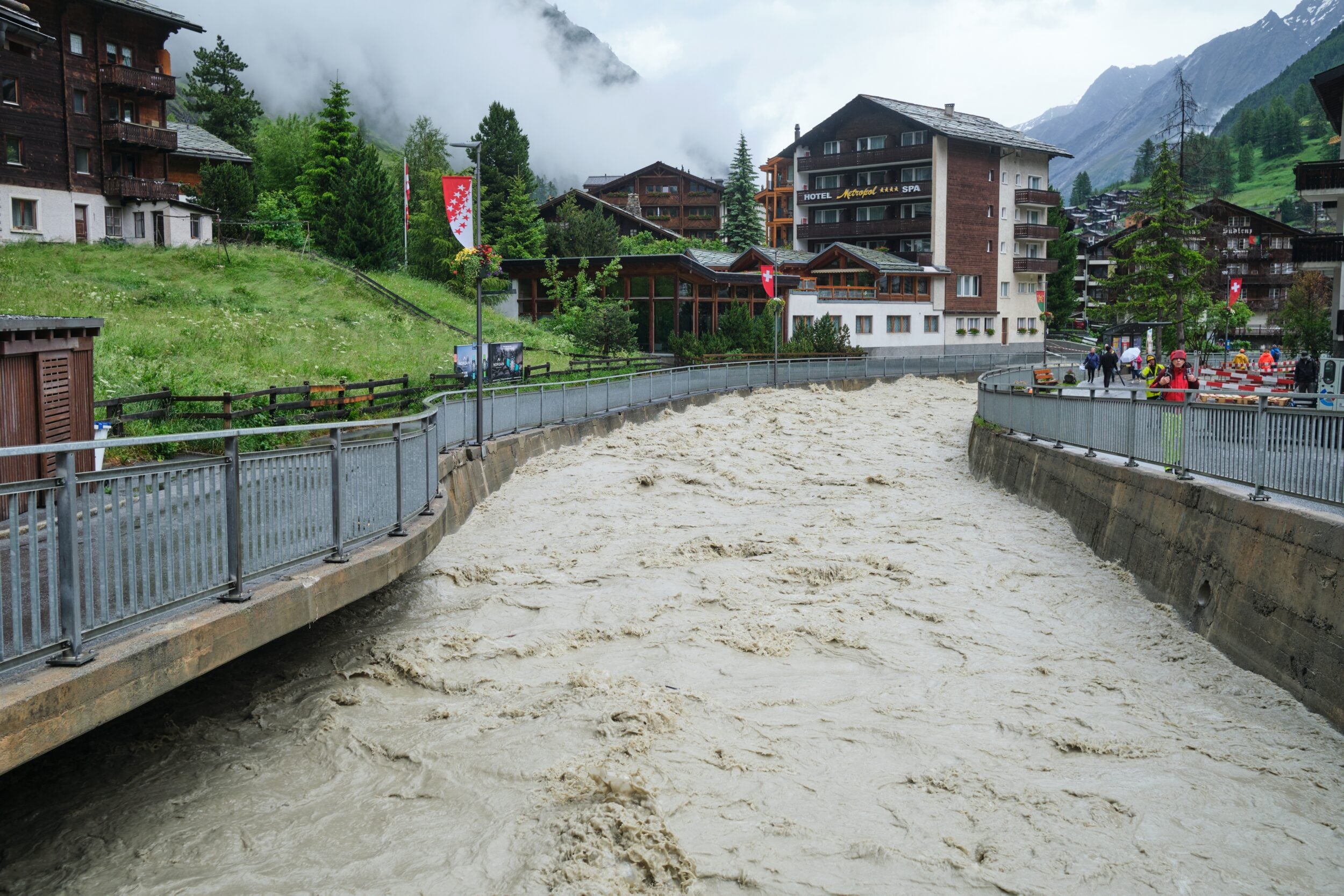
Natural hazards cannot be prevented—but their impacts can be significantly reduced through early risk detection. In the Alpine region, specialized agencies therefore continuously monitor at-risk areas. To this end, they use, among other things, geological field observations, geodetic measurement methods (e.g., GPS and laser measurements), drone and satellite data, and digital hazard maps. Together, these form the basis for detecting changes in the terrain at an early stage and continuously reassessing risks (Federal Office for the Environment [FOEN], 2024). This continuous monitoring also played a decisive role in the case of Blatten. The increasing rock movements on the Kleines Nesthorn were documented and evaluated over the course of several days. Although neither the exact timing nor the extent of the rockslide could be predicted with precision, the data collected enabled the authorities to conduct a well-founded risk assessment and, ultimately, to evacuate the population in a timely manner. This case demonstrates how important close cooperation between geologists, authorities, and emergency response organizations is when natural hazards develop dynamically (Swiss Radio and Television [SRF], 2025a). Blatten is not an isolated case. Other natural events in recent years—such as flooding in Valais or the ongoing slope instability in Brienz—also demonstrate that natural hazards in Switzerland require continuous monitoring and ongoing reassessment of the risk situation.
From Warning to Evacuation
However, identifying a hazard is only the first step. It is equally crucial that the insights gained are quickly translated into concrete measures. This includes clear decision-making processes, an effective crisis management structure, and a robust alert infrastructure through which authorities, emergency responders, and the affected population can be informed in a timely manner. Only the combination of early detection, situation assessment, alerting, and evacuation helps bring people to safety in time. Other natural events in Switzerland also demonstrate that such processes are relevant not only in the case of landslides. In Valais, for example, several campgrounds were closed or evacuated as a precautionary measure due to increased risks of flooding and natural hazards. While these measures sparked some debate, they underscored that precautionary warnings and evacuations are a central component of civil protection—even when a hazard ultimately does not materialize to the expected extent (SRF, 2025b; SRF, 2025c).
Natural hazards such as landslides, debris flows, flooding, and rockfalls will continue to affect the Alpine region in the future. It is therefore crucial that, in an emergency, warnings reach authorities, emergency responders, and the public quickly, reliably, and through multiple channels. An efficient alerting infrastructure is an essential component of modern civil protection and helps ensure that evacuations are initiated in a timely and coordinated manner.
As a specialist in siren and alerting systems, Kockum Sonics has been addressing the question of how to reliably deliver warnings to people even under exceptional conditions for decades. The focus is not on individual technologies, but rather on integrating robust alerting solutions into a comprehensive warning and civil protection strategy. To learn how modern early-warning systems detect risks early on, which technologies are used, and how they interact with alerting and evacuation processes, read our article “Natural Disasters and Early-Warning Systems.”
Sources Information
Bundesamt für Umwelt. (2024). Naturgefahren. https://www.bafu.admin.ch/bafu/de/home/themen/naturgefahren.html
Schweizer Radio und Fernsehen. (2025a). Katastrophe im Lötschental: Wie sich die Lage ob Blatten über Tage verschärft hat. https://www.srf.ch/news/katastrophe-im-loetschental-wie-sich-die-lage-ob-blatten-ueber-tage-verschaerft-hat
Schweizer Radio und Fernsehen. (2025b). Naturgefahren: Campingstreit im Wallis – Positive Zeichen vor der Sommersaison. https://www.srf.ch/news/schweiz/naturgefahren-campingstreit-im-wallis-positive-zeichen-vor-der-sommersaison
Schweizer Radio und Fernsehen. (2025c). Kurz vor Saisonstart: Kanton Wallis schliesst 13 Campingplätze per sofort. https://www.srf.ch/news/schweiz/kurz-vor-saisonstart-kanton-wallis-schliesst-13-campingplaetze-per-sofort
Schweizer Radio und Fernsehen. (2026a). So soll Blatten 2030 entstehen – den bröckelnden Bergen zum Trotz. https://www.srf.ch/news/ein-jahr-nach-der-katastrophe-so-soll-blatten-2030-entstehen-den-broeckelnden-bergen-zum-trotz
Schweizer Radio und Fernsehen. (2026b). Blatten: Welche Folgen hat der Wiederaufbau für das Lötschental? https://www.srf.ch/news/schweiz/nach-dem-bergsturz-blatten-welche-folgen-hat-der-wiederaufbau-fuer-das-loetschental
Schweizer Radio und Fernsehen. (2026c). «DOK x Einstein»: Die Katastrophe von Blatten – Das Jahr danach. https://medien.srf.ch/-/%C2%ABdok-x-einstein%C2%BB-die-katastrophe-von-blatten-das-jahr-danach
Schweizer Radio und Fernsehen. (2026d). Besuch im zerstörten Zuhause: Blatten – mitten im Schlamm suchen sie nach ihrem alten Leben. https://www.srf.ch/sendungen/unterhaltungssendungen/besuch-im-zerstoerten-zuhause-blatten-mitten-im-schlamm-suchen-sie-nach-ihrem-alten-leben
Staatsrat des Kantons Wallis. (2025, 3. September). Wiederaufbauprojekt für das künftige Blatten – Staatsrat verabschiedet Fahrplan. Kanton Wallis – Wiederaufbauprojekt für das künftige Blatten: Staatsrat verabschiedet Fahrplan
Sources Pictures:
Flavia Cochet / Shutterstock.com
Michael Derrer Fuchs / Shutterstock.com
I amar prestar aen / Shutterstock.com
Mophoto.ch / Shutterstock.com